Manual vs Automated Invoice Follow-Ups: Which Is Better?
Should businesses rely on manual invoice reminders or switch to automation? Explore the differences, benefits, and trade-offs between manual and automated follow-up processes.

Why Invoice Follow-Ups Matter
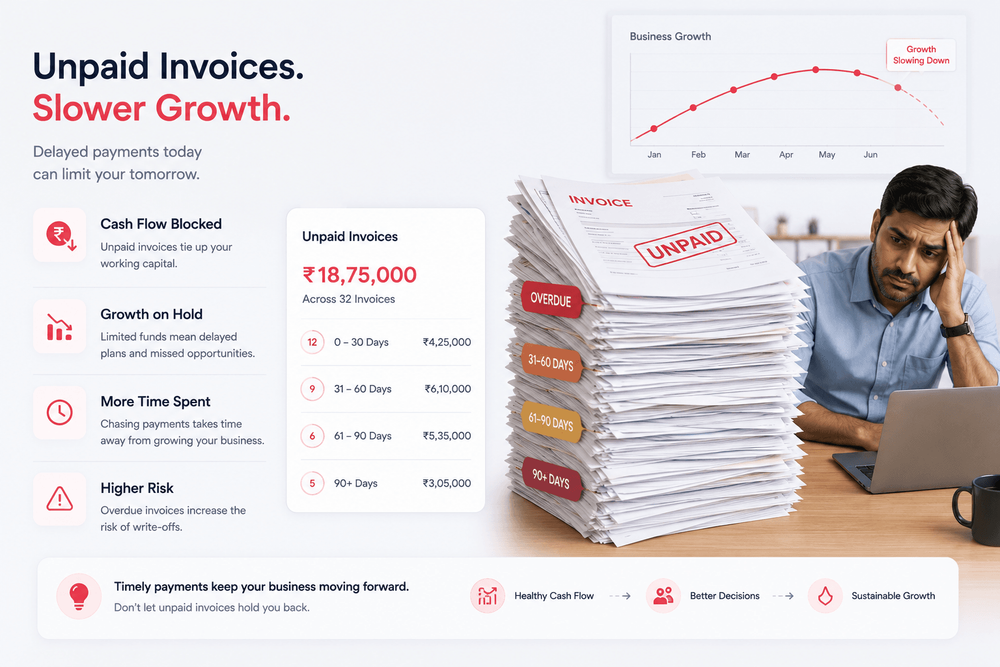
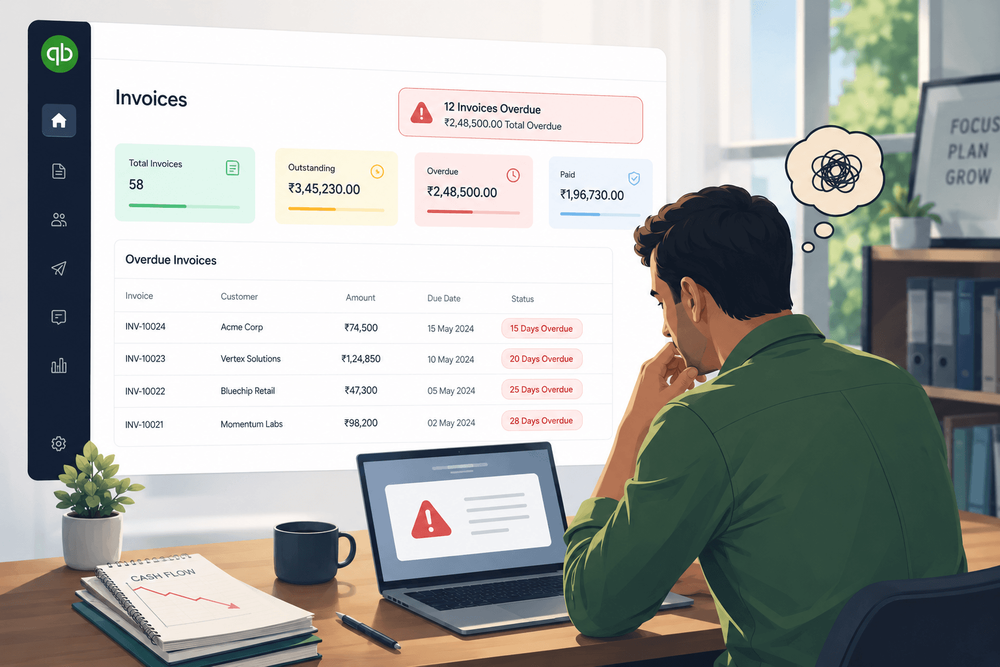
Late payments create unnecessary stress for service businesses, agencies, consultants, and freelancers. Regardless of company size, unpaid invoices can disrupt cash flow and consume valuable administrative time.
A reliable follow-up process helps businesses:
- Improve payment visibility
- Reduce overdue invoices
- Maintain customer communication
- Support healthier cash flow
The question many businesses face is simple:
Should invoice follow-ups be handled manually or automated?
The Manual Follow-Up Approach
Many businesses start with manual processes.
This often involves:
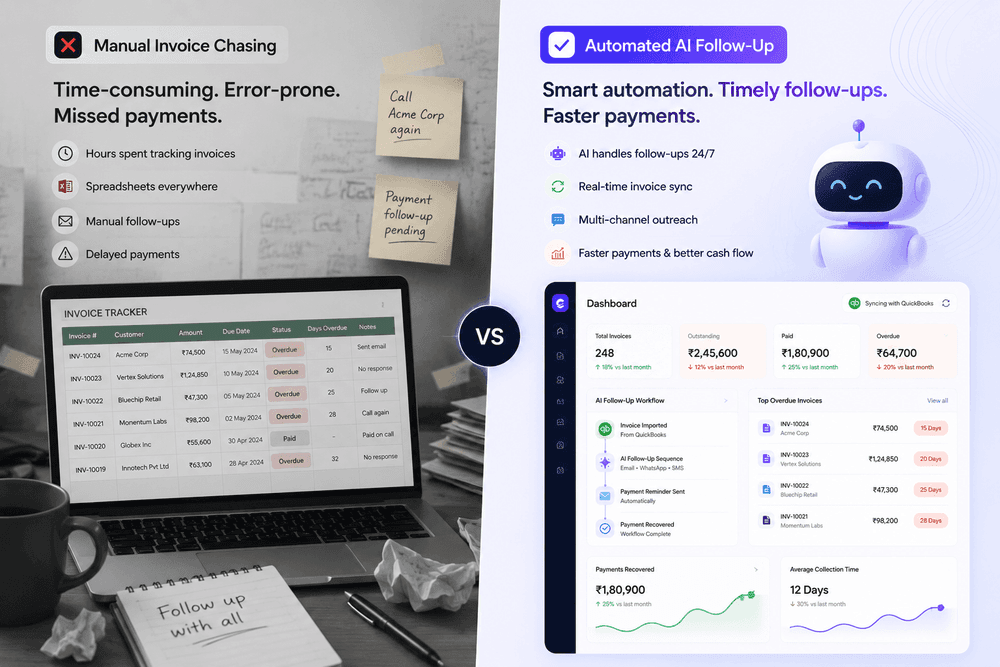
- Sending reminder emails individually
- Tracking invoices in spreadsheets
- Maintaining payment notes manually
- Relying on memory and calendar reminders
Advantages of Manual Follow-Ups
- Personalized communication
- Greater flexibility for special situations
- Direct control over messaging
Challenges of Manual Follow-Ups
As invoice volume increases:
- Reminders become inconsistent
- Follow-ups get delayed
- Communication history becomes fragmented
- Administrative workload grows
Manual processes may work for a small number of invoices but often become difficult to manage as businesses scale.
The Automated Follow-Up Approach
Automation introduces structure and consistency into the collection process.
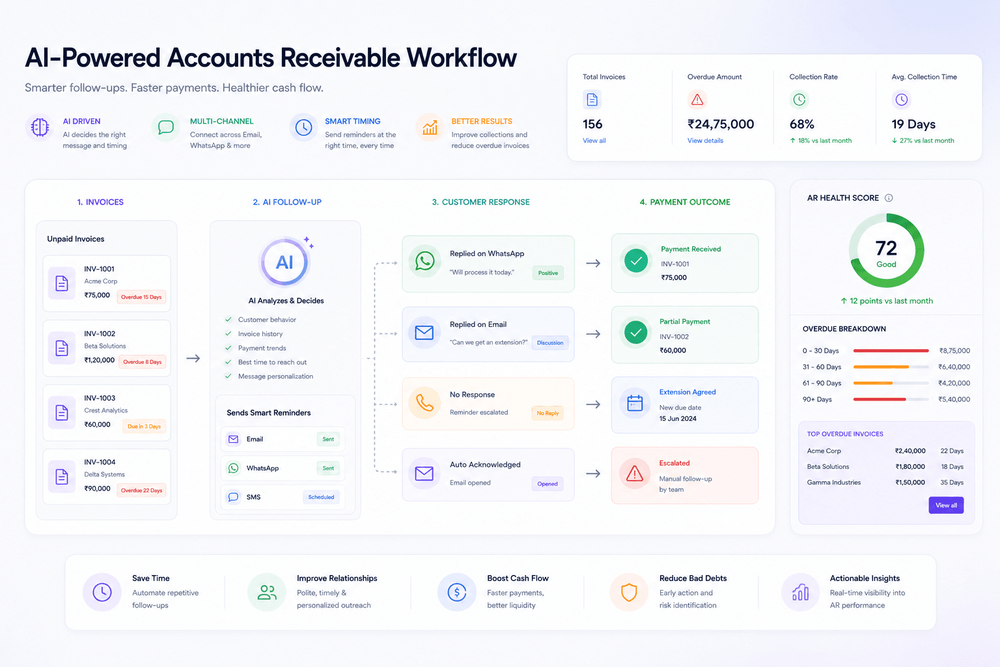
Automated systems can:
- Schedule reminders automatically
- Track communication history
- Monitor overdue balances
- Trigger follow-ups based on invoice age
Advantages of Automation
- Consistent reminder schedules
- Reduced manual effort
- Better visibility into outstanding invoices
- Improved scalability
Businesses often discover that automation frees teams from repetitive administrative work, allowing them to focus on customers and growth initiatives.
Potential Limitations
Automation should not completely replace human interaction.
Complex customer situations may still require:
- Personalized communication
- Payment negotiations
- Escalation discussions
The most effective approach often combines automation with human oversight.
Comparing Manual and Automated Follow-Ups
| Factor | Manual Process | Automated Process |
|---|---|---|
| Consistency | Depends on team discipline | Highly consistent |
| Time Investment | High | Low |
| Scalability | Limited | Strong |
| Communication Tracking | Often fragmented | Centralized |
| Reporting & Visibility | Manual | Automated |
| Customer Personalization | High | Moderate to High |
For growing businesses, automation typically provides stronger long-term operational benefits.
How Claro Flow Helps
Claro Flow is designed to reduce the burden of invoice follow-ups while maintaining visibility and control.
With structured workflows, businesses can:
- Organize reminder schedules
- Monitor invoice status
- Track communication history
- Maintain collection consistency
Rather than manually chasing every payment, teams can focus on higher-value activities while ensuring follow-ups happen on time.
Best Practices Regardless of Your Approach
Whether using manual or automated processes:
- Define clear payment terms.
- Follow up consistently.
- Maintain a professional tone.
- Track customer commitments.
- Review outstanding balances regularly.
A structured process is often more important than the specific tools being used.
Which Approach Is Better?
For businesses managing only a handful of invoices, manual follow-ups may be sufficient.
However, as invoice volume grows, automation generally delivers:
- Better consistency
- Greater efficiency
- Improved visibility
- Reduced administrative burden
The goal is not simply collecting payments faster. The larger objective is building reliable financial operations that support healthy cash flow and stronger customer relationships.
For most growing SMBs, automated invoice follow-ups provide a more scalable and sustainable solution.