Optimizing Invoice Collections for Indian Small Businesses: Strategies and Best Practices
Streamline invoice collections with Claro Flow for Indian SMBs

Why Invoice Management Matters
Indian small businesses, agencies, service providers, and freelancers face numerous financial challenges, and invoice collection is often one of the biggest.
Delayed payments can disrupt cash flow, limit growth opportunities, and create unnecessary administrative work. Without a structured process, businesses may spend significant time chasing payments instead of focusing on customers and operations.
An effective invoice management strategy helps businesses maintain visibility into outstanding invoices, improve payment collection processes, and support healthier financial operations.
Understanding Efficient Invoice Management
Invoice management involves more than simply sending invoices. It includes the complete process of:
- Creating invoices
- Sending invoices
- Tracking payment status
- Following up on overdue invoices
- Maintaining communication records
For Indian SMBs, efficient invoice management can help:
- Improve cash flow visibility
- Reduce overdue invoices
- Minimize administrative effort
- Strengthen customer relationships
Key Components of Effective Invoice Management
Successful invoice management typically includes:
- Accurate and detailed invoices
- Prompt invoice delivery
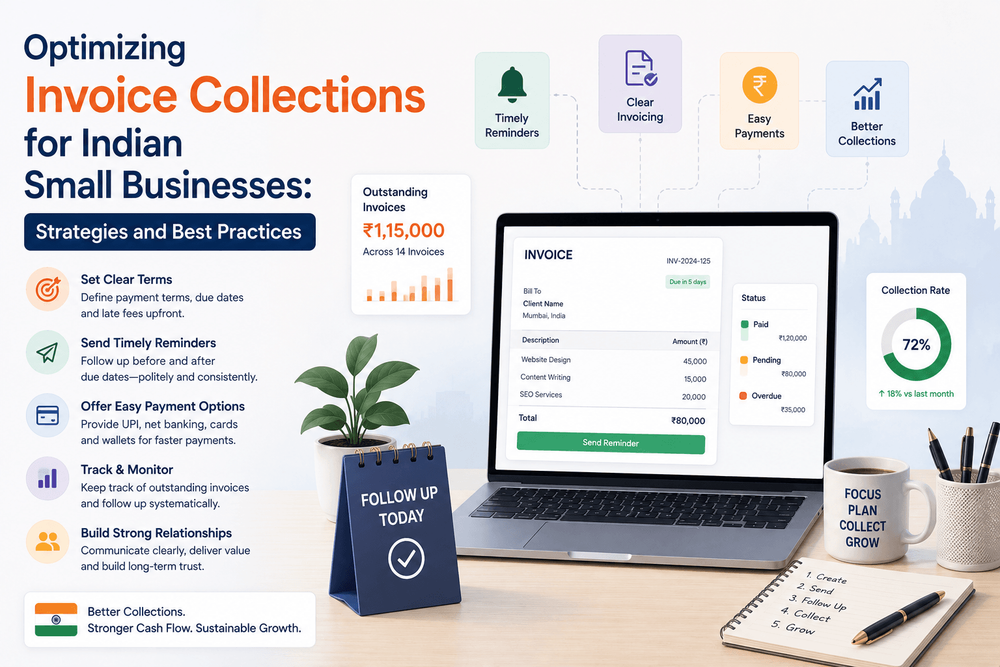
- Clear payment terms
- Consistent follow-up processes
- Professional customer communication
Strategies to Improve Invoice Collections
Businesses can improve collection performance by implementing a structured approach to accounts receivable management.
Implement an Organized Invoicing System
A centralized invoicing process helps reduce errors and ensures invoices are delivered on time.
Benefits include:
- Improved visibility
- Faster invoice creation
- Reduced manual work
- Better tracking of outstanding balances
Define Clear Payment Terms
Customers are more likely to pay on time when payment expectations are clearly communicated.
Include:
- Due dates
- Accepted payment methods
- Payment instructions
- Late payment policies (if applicable)
Offer Flexible Payment Options
Providing multiple payment methods can reduce friction during the payment process.
Examples include:
- Bank transfers
- UPI payments
- Online payment links
- Digital wallets
Maintain Consistent Follow-Ups
Many late payments occur because invoices are forgotten rather than intentionally ignored.
A structured follow-up schedule helps maintain visibility without overwhelming customers.
Best Practices for Accounts Receivable Management
Personalize Customer Communication
Professional and personalized communication can improve response rates and strengthen customer relationships.
Consider:
- Addressing customers by name
- Referencing invoice numbers clearly
- Maintaining a courteous tone
Encourage Early Payments
Some businesses choose to offer incentives for faster payments, such as:
- Early payment discounts
- Preferred customer benefits
- Flexible payment arrangements
Resolve Invoice Issues Quickly
Disputes and billing questions can delay payments significantly.
Responding promptly helps:
- Reduce collection delays
- Improve customer satisfaction
- Maintain trust
Leverage Automation
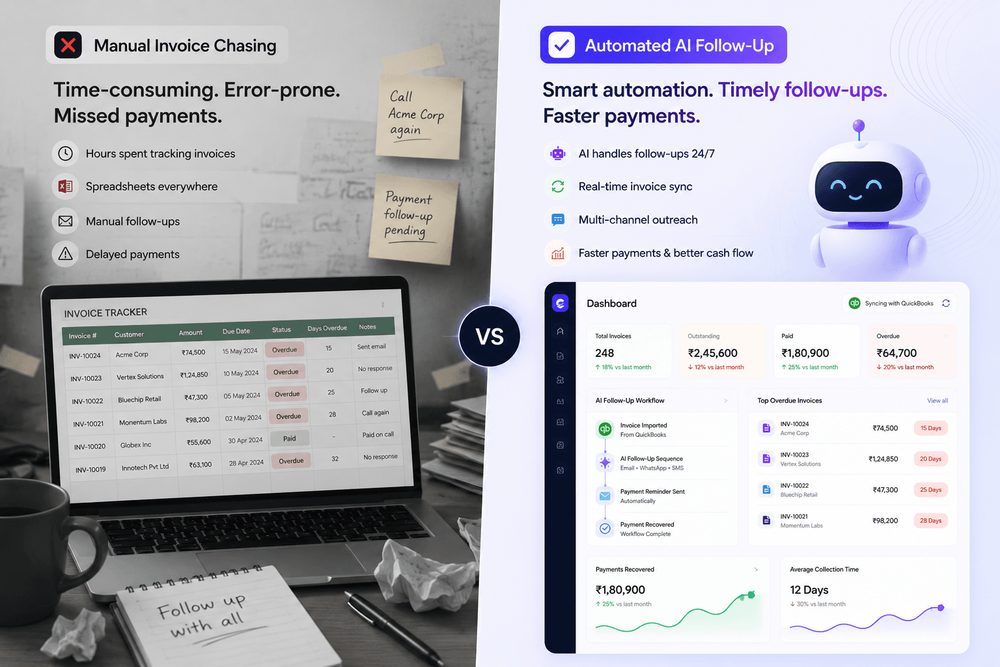
Automation can help businesses manage follow-ups, reminders, and invoice tracking more efficiently.
Benefits include:
- Consistent communication
- Better visibility into outstanding invoices
- Reduced manual workload
- Improved reporting
How Claro Flow Helps Simplify Accounts Receivable Management
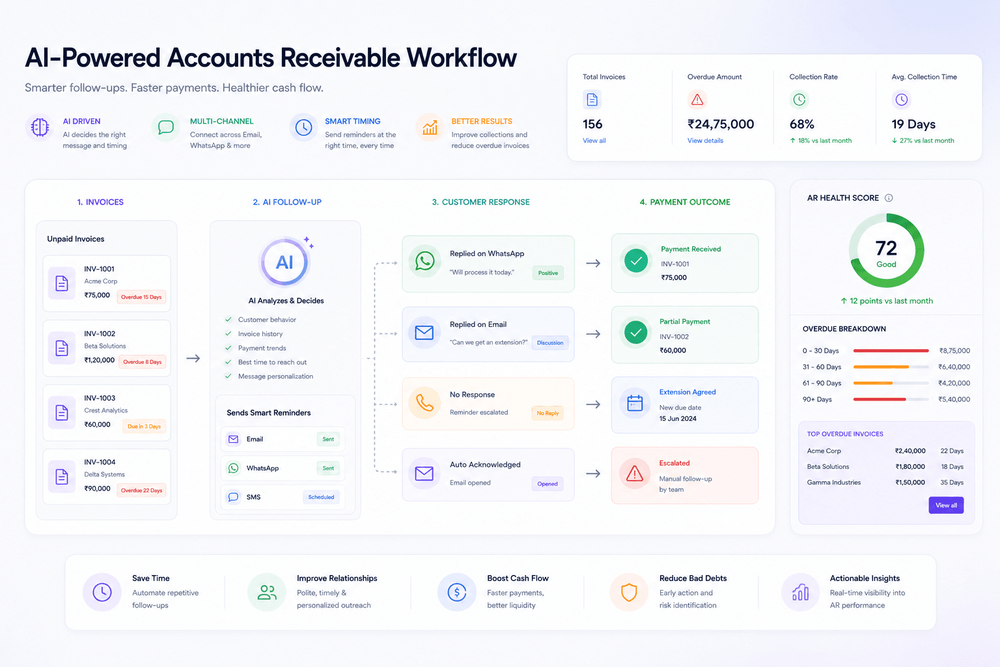
Claro Flow is designed to help businesses create structured invoice follow-up workflows and improve visibility into accounts receivable activities.
With Claro Flow, businesses can:
- Organize follow-ups by invoice age
- Track communication history
- Monitor outstanding balances
- Review customer commitments
- Identify invoices that may require escalation
The objective is not to guarantee payment outcomes but to provide a more organized and consistent collection process.
Common Invoice Management Mistakes to Avoid
Many businesses struggle with collections because they:
- Delay sending invoices
- Follow up inconsistently
- Depend on spreadsheets and memory
- Fail to track customer commitments
- Lack visibility into aging invoices
Addressing these issues often leads to improved operational efficiency and better financial visibility.
Final Thoughts
Optimizing invoice collections is essential for the long-term financial health of Indian SMBs.
By combining clear payment terms, consistent follow-ups, effective communication, and modern automation tools, businesses can improve visibility into receivables and create more reliable financial processes.
Solutions like Claro Flow help businesses streamline accounts receivable management, reduce administrative burden, and maintain greater control over outstanding invoices and collection activities.