7 Invoice Reminder Templates That Actually Work
Not every unpaid invoice needs the same message. Explore 7 invoice reminder templates designed for different stages of the payment follow-up process.

Why the Right Reminder Matters
Late payments create unnecessary stress for service businesses, agencies, consultants, and freelancers. While many businesses know they need to follow up on overdue invoices, they often struggle with what to say and when to say it.
The reality is that not every unpaid invoice requires the same message.
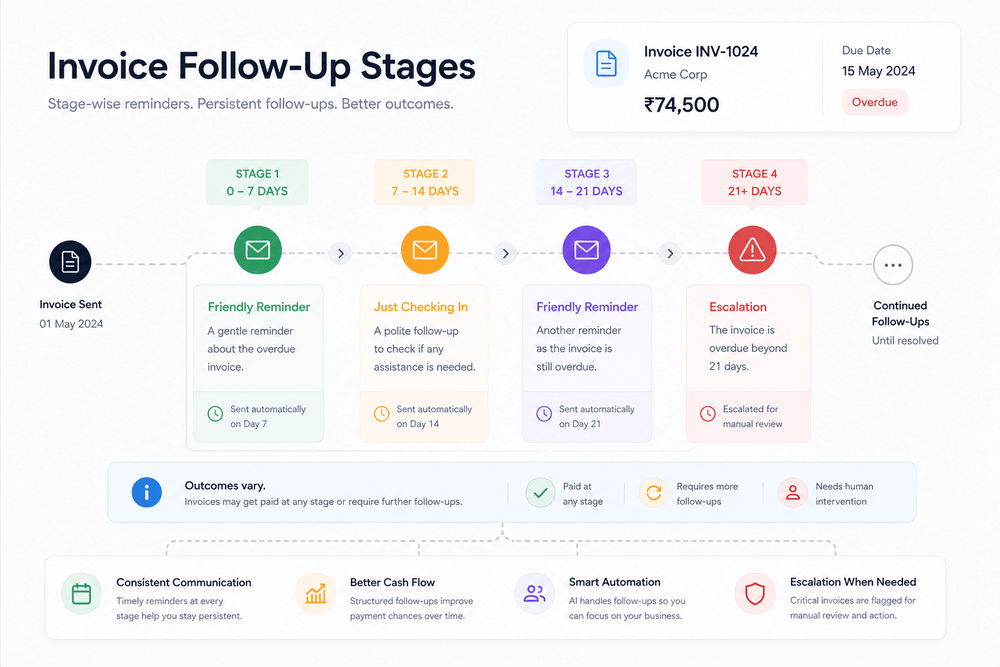
A reminder sent one day before the due date should sound very different from a reminder sent three weeks after payment is overdue.
By using stage-based reminder templates, businesses can maintain professionalism, improve communication consistency, and keep outstanding invoices visible without creating unnecessary friction.
Common Mistakes in Invoice Follow-Ups
Many businesses:
- Send the same message repeatedly
- Follow up inconsistently
- Forget previous customer responses
- Escalate too aggressively
- Wait too long before reaching out
A structured communication process helps create clarity for both businesses and customers.
Template #1: Upcoming Due Date Reminder
When to use: 1–3 days before the invoice due date
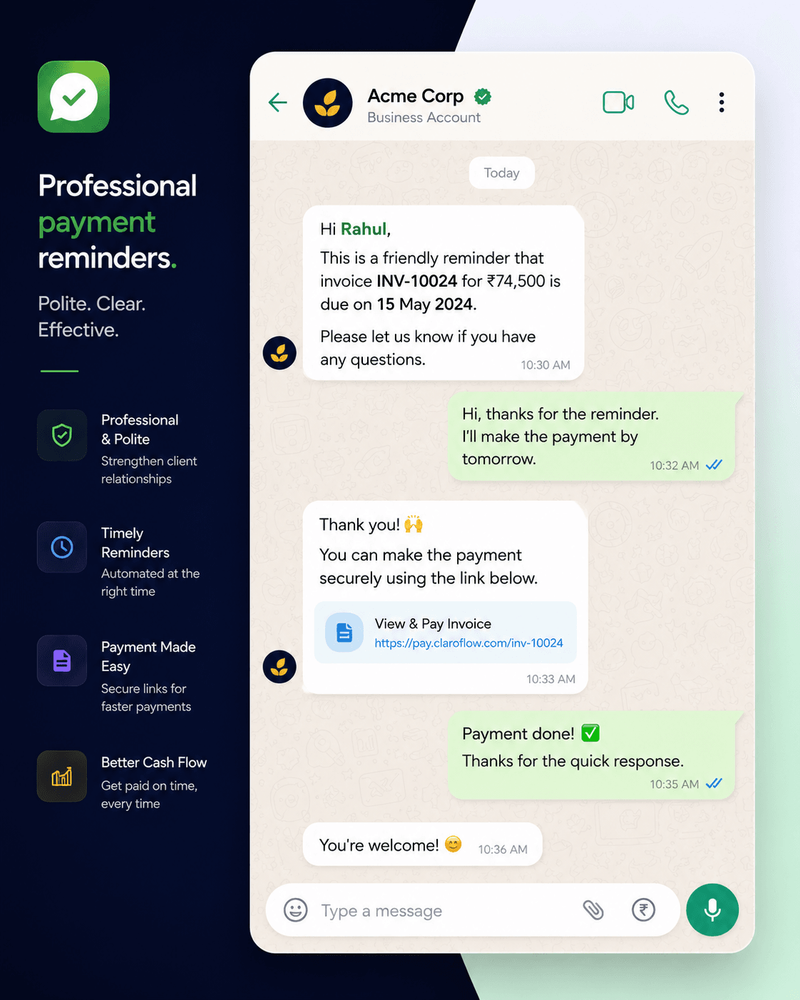
Hi {{Customer Name}},
Just a friendly reminder that Invoice #{{Invoice Number}} for {{Amount}} is due on {{Due Date}}.
Please let us know if you have any questions regarding the invoice.
Thank you.
Purpose:
- Confirm invoice visibility
- Prevent accidental late payments
- Maintain positive communication
Template #2: First Reminder After Due Date
When to use: 1–7 days overdue
Hi {{Customer Name}},
We noticed Invoice #{{Invoice Number}} is now past its due date.
We wanted to check whether payment has already been processed or if there is anything we can assist with.
Thank you for your time.
Purpose:
- Gentle follow-up
- Verify payment status
- Encourage communication
Template #3: Second Reminder
When to use: 7–14 days overdue
Hi {{Customer Name}},
This is a follow-up regarding Invoice #{{Invoice Number}}, which remains outstanding.
If payment has already been made, please disregard this message. Otherwise, we'd appreciate an update regarding the payment timeline.
Thank you.
Purpose:
- Increase visibility
- Request status update
- Maintain professionalism
Template #4: Commitment Confirmation
When to use: Customer has promised payment
Hi {{Customer Name}},
Thank you for confirming your planned payment date.
We're simply noting our records and will continue monitoring the invoice status.
Please let us know if anything changes.
Thank you.
Purpose:
- Document commitments
- Maintain communication history
- Reduce misunderstandings
Template #5: Continued Follow-Up
When to use: 14–21 days overdue
Hi {{Customer Name}},
We're following up regarding Invoice #{{Invoice Number}}, which remains unpaid.
We would appreciate an update on the current status so we can keep our records accurate.
Thank you for your assistance.
Purpose:
- Keep communication active
- Gather status updates
- Prepare for potential escalation if needed
Template #6: Escalation Notice
When to use: 21+ days overdue
Hi {{Customer Name}},
We have attempted several follow-ups regarding Invoice #{{Invoice Number}}.
We would appreciate an update regarding the outstanding balance and any expected payment timeline.
If additional assistance is needed, please let us know.
Thank you.
Purpose:
- Increase urgency
- Encourage response
- Maintain professionalism
Template #7: Final Collection Review
When to use: Internal escalation stage
Hi {{Customer Name}},
We are reviewing long-outstanding invoices and would appreciate an update regarding Invoice #{{Invoice Number}}.
Please let us know if payment has been processed or if there are any issues preventing resolution.
Thank you.
Purpose:
- Support final review processes
- Request closure or clarification
- Maintain a professional tone
How Claro Flow Helps Manage Reminder Templates
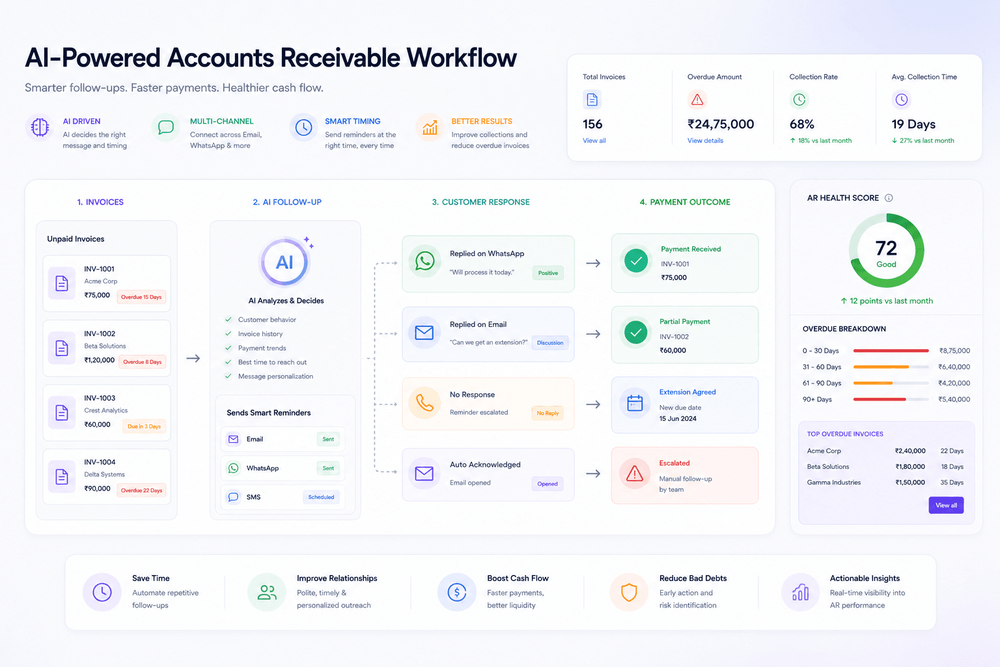
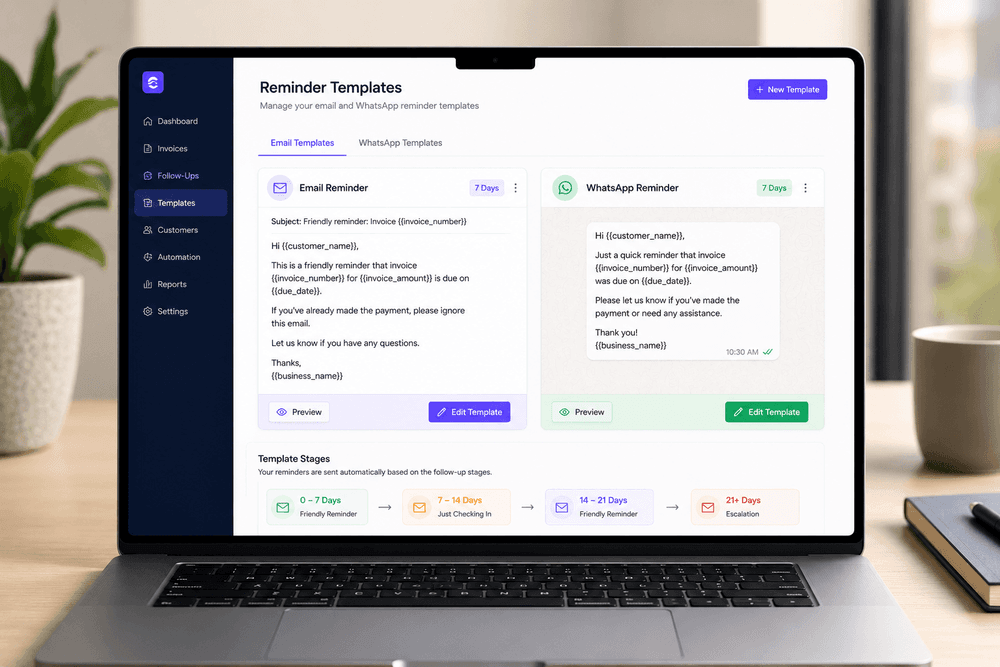
Claro Flow is designed around stage-based invoice follow-ups.
Instead of sending reminders manually, businesses can:
- Apply different templates based on invoice age
- Track communication history
- Monitor customer commitments
- Maintain visibility into outstanding balances
- Identify invoices that may require escalation
This helps teams create consistency without assuming a particular payment outcome.
Best Practices for Reminder Templates
To improve effectiveness:
- Keep messages concise.
- Use a professional tone.
- Reference invoice details clearly.
- Adjust messaging based on invoice age.
- Track customer responses and commitments.
- Maintain a consistent reminder schedule.
- Escalate only when appropriate.
The goal is communication clarity, not pressure.
Final Thoughts
Effective invoice follow-ups are rarely about sending more reminders. They are about sending the right message at the right stage.
By using structured templates throughout the collection process, businesses can maintain professionalism, improve visibility into outstanding invoices, and create a more organized approach to accounts receivable management.
Whether a customer pays after the first reminder or requires additional follow-up, a consistent communication framework helps teams stay organized and informed throughout the process.