How Often Should You Follow Up on an Unpaid Invoice?
Following up too often can frustrate customers, while waiting too long can hurt cash flow. Discover a practical invoice reminder schedule for managing unpaid invoices professionally.

Why Follow-Up Timing Matters
Late payments create unnecessary stress for service businesses, agencies, consultants, and freelancers. While following up is important, the timing and consistency of reminders can have a significant impact on customer relationships and cash flow visibility.
Many businesses either follow up too aggressively or wait too long before reaching out. Both approaches can create challenges.
A structured reminder process helps businesses:
- Maintain professionalism
- Improve visibility into outstanding invoices
- Reduce manual effort
- Create consistency across collections
The goal is not to pressure customers but to ensure invoices remain visible and communication stays active.
The Cost of Inconsistent Follow-Ups
Many businesses still rely on:
- Manual reminders
- Personal memory
- Calendar notes
- Spreadsheets
As invoice volume grows:
- Follow-ups become inconsistent
- Overdue invoices are overlooked
- Communication history becomes fragmented
- Collection activities become difficult to track
Without a defined process, businesses often struggle to know when the next reminder should be sent.
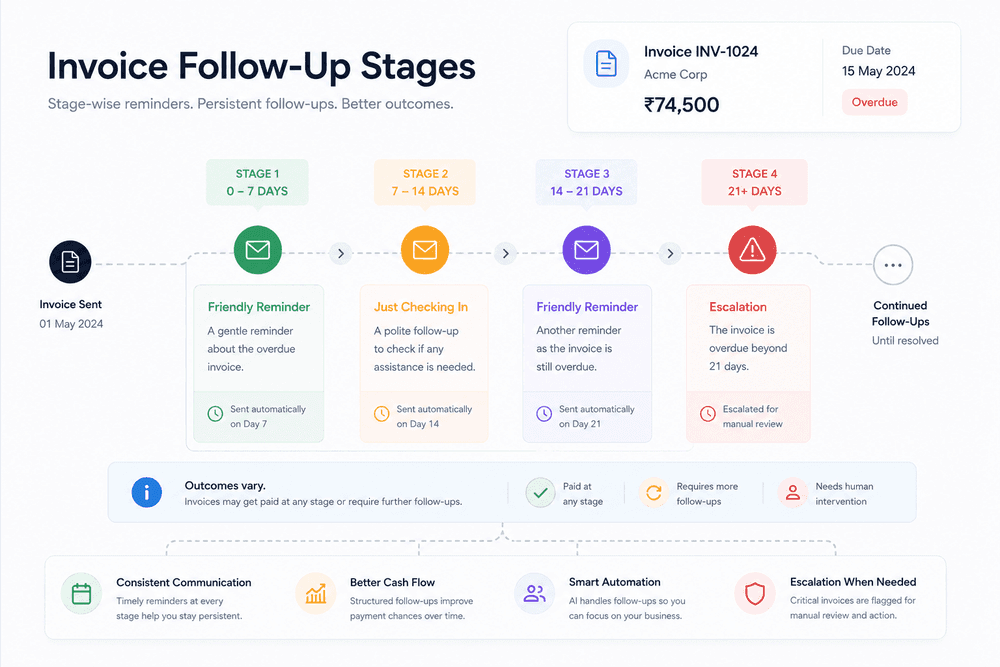
A Stage-Based Reminder Approach
Rather than sending random reminders, many businesses benefit from a structured follow-up schedule.
Stage 1: Early Reminder (0–7 Days)
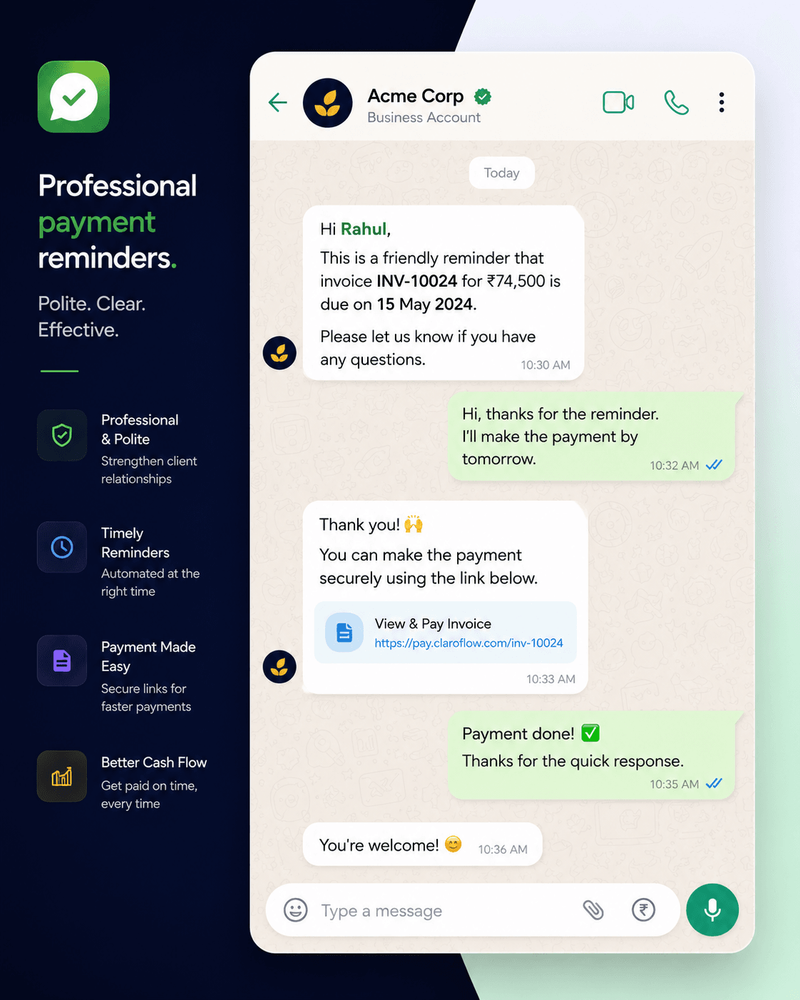
This stage focuses on friendly communication.
Objectives include:
- Confirming invoice receipt
- Providing payment details if needed
- Maintaining visibility
At this stage, some customers may pay immediately, while others may simply acknowledge the reminder.
Stage 2: First Overdue Reminder (7–14 Days)
If payment remains outstanding, communication can become slightly more direct while remaining professional.
Focus areas include:
- Referencing the invoice due date
- Confirming payment status
- Requesting an update if payment is delayed
This stage helps keep the invoice active without creating unnecessary pressure.
Stage 3: Continued Follow-Up (14–21 Days)
As invoices remain unpaid, consistent communication becomes increasingly important.
Businesses may:
- Request payment updates
- Reconfirm outstanding balances
- Document customer commitments
At this stage, some customers may pay, while others may require additional follow-up.
Stage 4: Escalation Consideration (21+ Days)
Not every overdue invoice follows the same path.
Some customers may pay after several reminders, while others may require escalation procedures.
Depending on internal policies, businesses may consider:
- Escalating to management
- Direct phone outreach
- Formal collection processes
- Additional review procedures
The objective is visibility and accountability rather than assuming a specific payment outcome.
How Claro Flow Supports Structured Follow-Ups
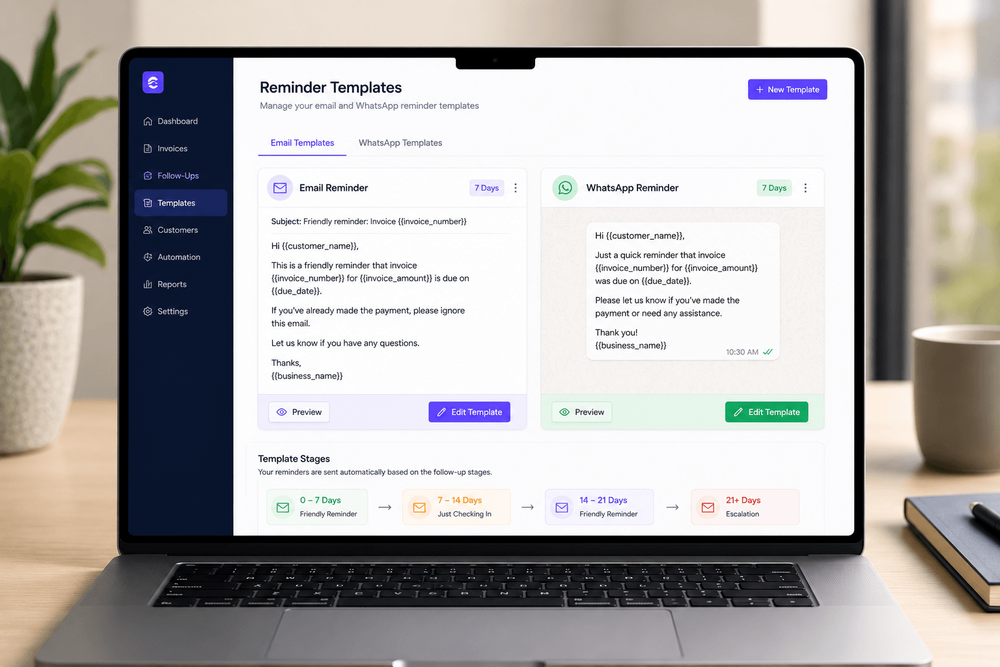
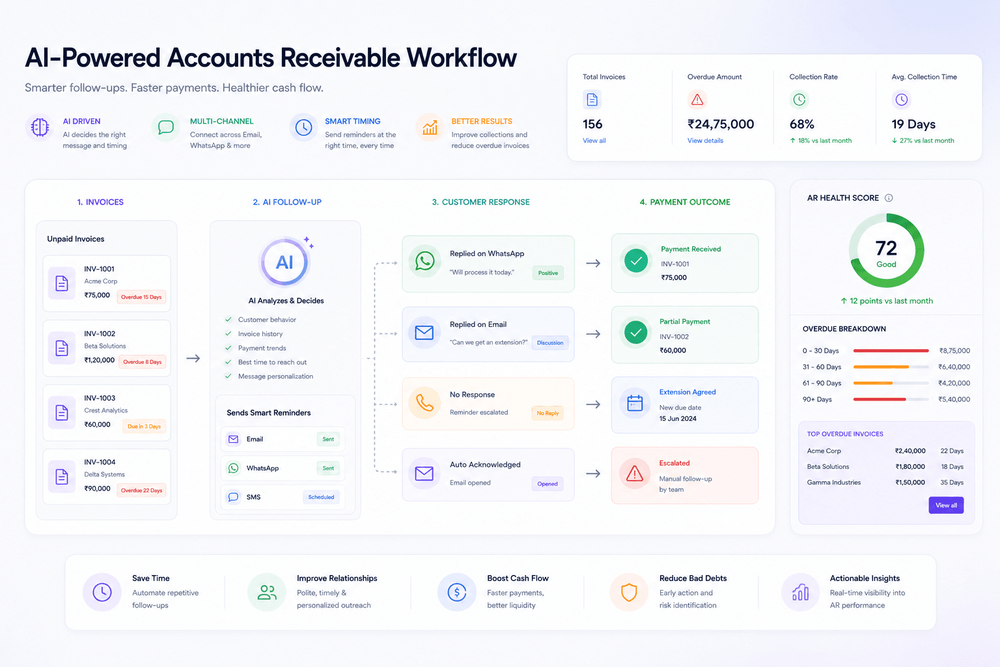
Claro Flow is designed around stage-based follow-up workflows.
Instead of relying on memory or spreadsheets, businesses can:
- Organize reminders by invoice age
- Apply different communication approaches at each stage
- Monitor communication history
- Track outstanding balances
- Identify invoices that may require escalation
This helps teams maintain consistency while keeping full visibility into the collection process.
Best Practices for Invoice Reminder Schedules
To improve follow-up effectiveness:
- Define reminder stages in advance.
- Use different messaging for different invoice ages.
- Keep communication professional and respectful.
- Track customer commitments and responses.
- Review overdue invoices regularly.
Consistency is often more effective than frequency alone.
Final Thoughts
There is no universal rule for how often businesses should follow up on unpaid invoices.
The most effective approach is usually a structured, stage-based process that balances persistence with professionalism.
Whether an invoice is paid after the first reminder or requires escalation later, businesses benefit from having clear workflows, communication history, and visibility into every stage of the collection process.