WhatsApp Payment Reminders: Best Practices for SMBs
WhatsApp offers SMBs a fast and effective way to follow up on unpaid invoices. Discover best practices for sending professional payment reminders while preserving customer relationships.

Why WhatsApp Has Become a Popular Collection Channel
Late payments create unnecessary stress for service businesses, agencies, consultants, and freelancers. As businesses look for faster and more direct communication methods, WhatsApp has become an increasingly popular channel for payment reminders.
Unlike traditional email follow-ups, WhatsApp messages are often seen and read quickly, making them an effective tool for improving customer response rates.
However, sending reminders through WhatsApp requires a structured process. Businesses often underestimate the time lost to repetitive payment follow-ups. When reminders become systematic instead of reactive, teams gain visibility, reduce stress, and spend more time on growth activities.
Why Payment Reminders Often Fall Through the Cracks
Many businesses still rely on:
- Manual reminders
- Spreadsheets
- Sticky notes and memory
- Inconsistent follow-up schedules
As invoice volume increases:
- Overdue invoices accumulate
- Follow-up consistency declines
- Communication history becomes difficult to track
- Cash flow visibility decreases
Without a repeatable process, teams spend significant time chasing payments instead of focusing on customers and business growth.
Building a Consistent Reminder Process
A modern payment reminder process should be proactive rather than reactive.
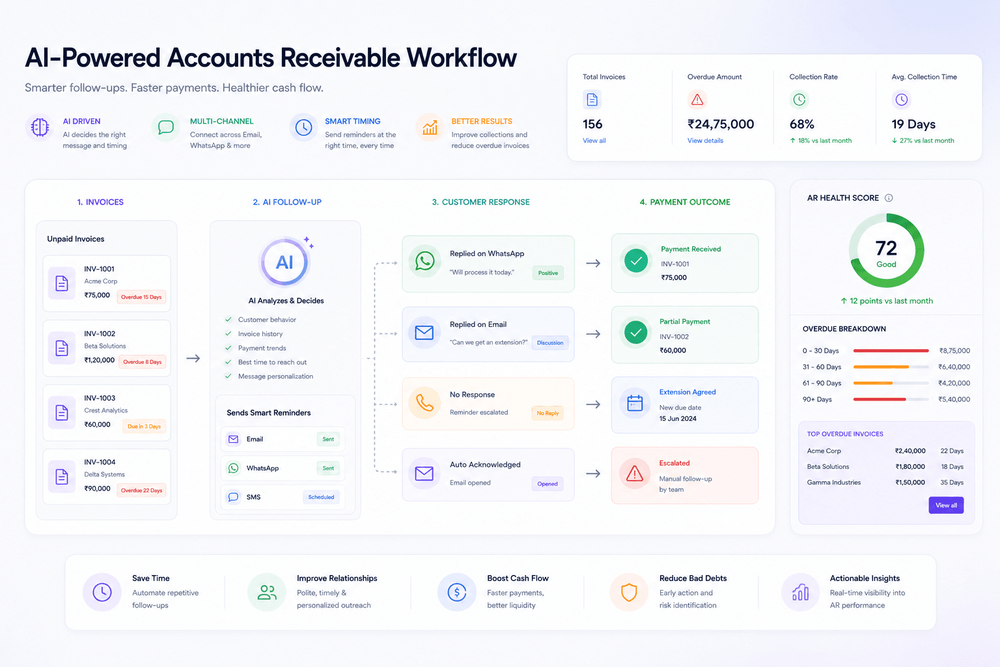
Automation helps businesses:
- Schedule reminders in advance
- Track customer communication history
- Monitor overdue balances
- Maintain a professional and consistent tone
When reminders follow a structured workflow, organizations benefit from:
- Better visibility into outstanding invoices
- Reduced administrative workload
- Improved collection consistency
- Stronger financial operations
Over time, reporting and dashboards help businesses understand payment behavior and identify areas for improvement.
Best Practices for WhatsApp Payment Reminders
To maximize effectiveness while maintaining professionalism:
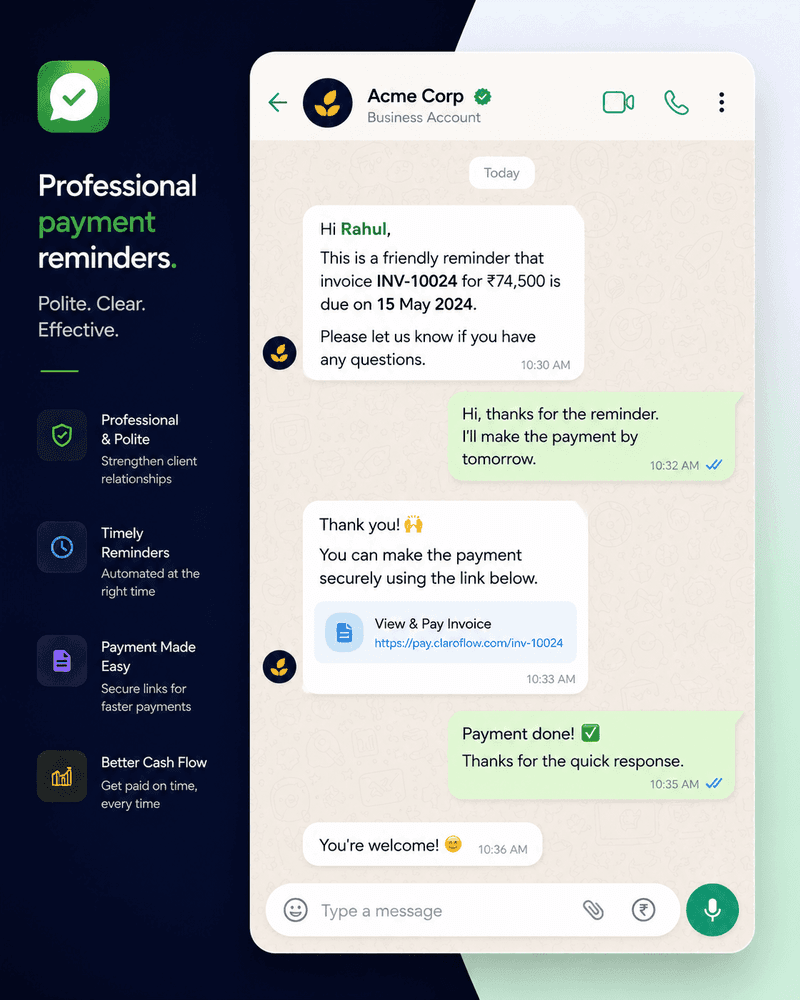
Keep Messages Clear and Concise
Customers should immediately understand:
- Which invoice is outstanding
- The payment amount
- The due date
- The next action required
Maintain a Professional Tone
Friendly reminders are generally more effective than aggressive collection messages. The objective is to encourage payment while preserving long-term customer relationships.
Follow Up Consistently
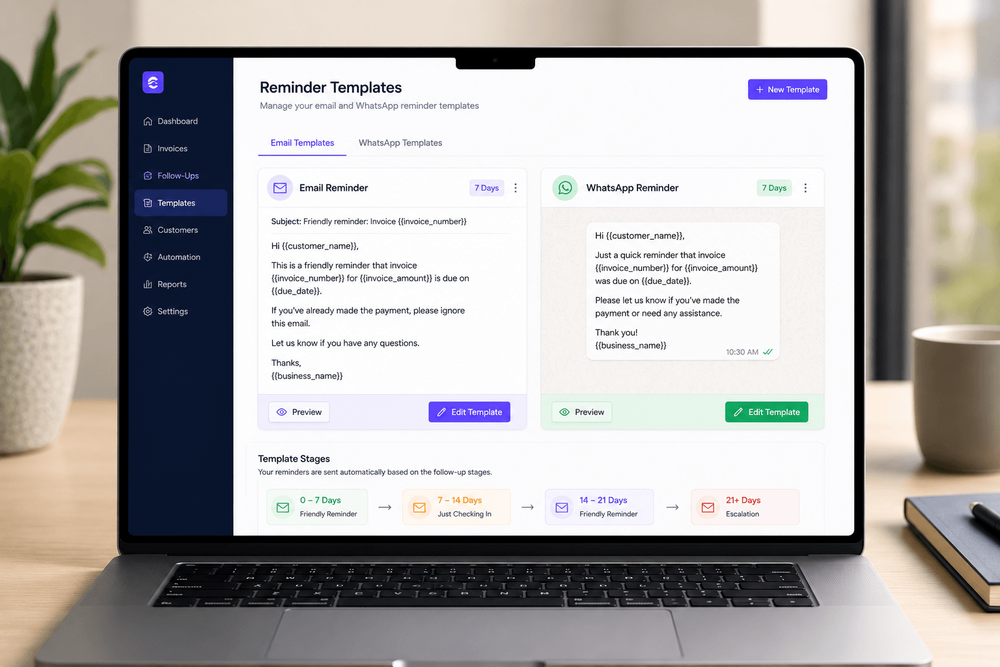
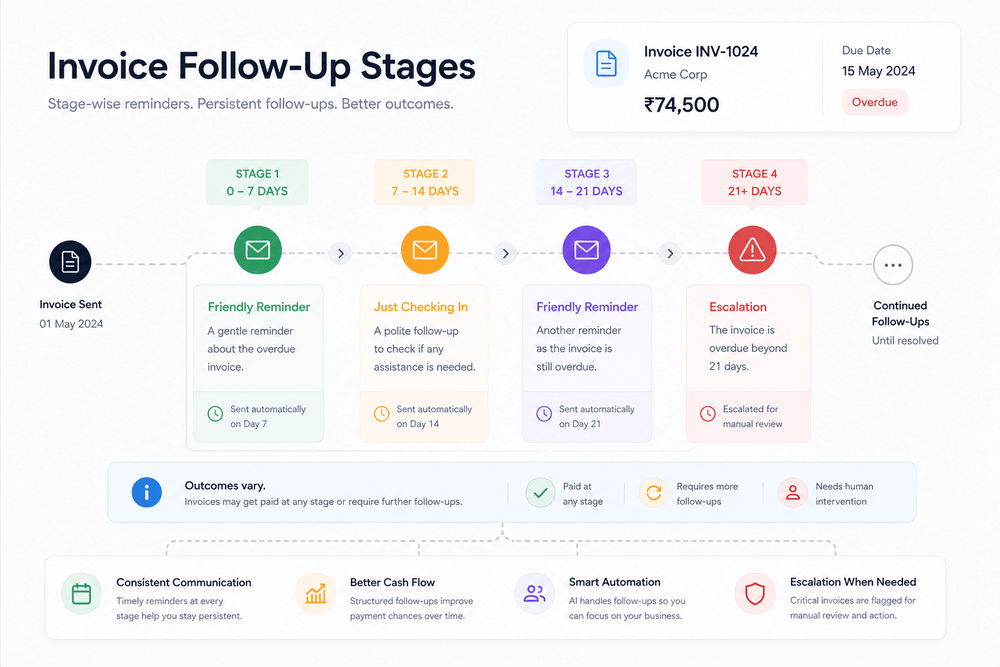
Create a structured reminder schedule rather than sending messages randomly.
Examples include:
- Reminder before due date
- Reminder shortly after due date
- Escalation reminders for older invoices
Track Customer Commitments
Whenever a customer confirms a payment date, record and monitor the commitment to ensure follow-up happens at the appropriate time.
Review Outstanding Balances Regularly
Weekly reviews help identify overdue accounts before they become significant collection problems.
How Claro Flow Simplifies WhatsApp Follow-Ups
Claro Flow is designed to reduce the burden of invoice follow-ups by helping businesses create structured collection workflows.
Rather than manually tracking every reminder, teams can:
- Organize follow-up schedules
- Monitor communication history
- Track overdue invoices
- Maintain visibility across collection activities
This reduces manual effort while creating a more reliable and professional payment collection process.
Final Thoughts
The goal of WhatsApp payment reminders is not simply collecting money faster.
The larger objective is creating reliable financial operations that support:
- Healthy cash flow
- Better customer relationships
- Improved collection visibility
- Sustainable business growth
When businesses combine WhatsApp communication with structured workflows, templates, reporting, and consistent follow-up processes, they create a stronger foundation for long-term financial health.