How to Improve Cash Flow Without Finding New Customers
Growing revenue isn't the only way to improve cash flow. Learn how businesses can unlock cash already owed to them through better invoice management and follow-up processes.

The Hidden Cash Sitting Inside Your Business
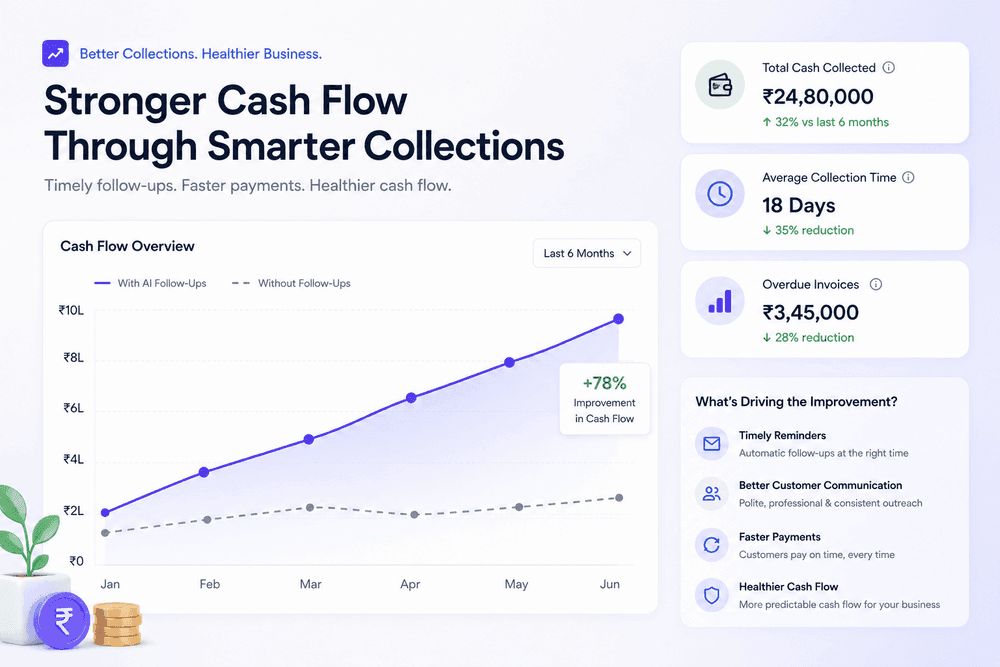
When businesses look to improve cash flow, the first instinct is often to find more customers, generate more sales, or launch new marketing campaigns.
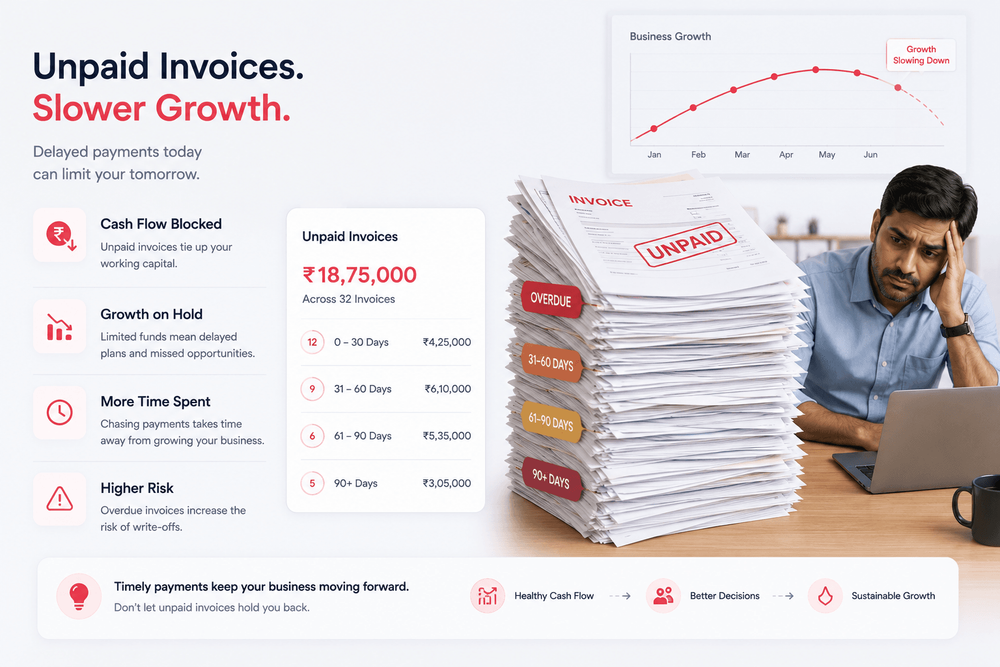
While growth is important, many businesses already have cash tied up in unpaid invoices.
Late payments create unnecessary stress for service businesses, agencies, consultants, and freelancers. Outstanding receivables can limit growth, create operational uncertainty, and force businesses to spend valuable time chasing payments.
In many cases, improving collections can strengthen cash flow without acquiring a single new customer.
Why Cash Flow Problems Often Start Internally
Many businesses rely on:
- Manual invoice tracking
- Inconsistent follow-ups
- Spreadsheets and memory
- Reactive collection processes
As invoice volume grows:
- Outstanding balances increase
- Payment visibility decreases
- Follow-ups become inconsistent
- Collection activities consume more time
The challenge is often not revenue generation but revenue collection.
Money that has already been earned may remain unavailable simply because there is no structured process for tracking and following up on unpaid invoices.
Ways to Improve Cash Flow Without Increasing Sales
1. Send Invoices Promptly
Delays in invoicing often create delays in payment.
The sooner an invoice is issued, the sooner the payment cycle begins.
2. Improve Payment Visibility
Businesses should maintain a clear view of:
- Outstanding invoices
- Invoice aging
- Customer commitments
- Follow-up activity
Visibility makes it easier to identify potential issues before they become serious collection problems.
3. Create a Structured Follow-Up Process
Many overdue invoices are not the result of disputes or unwillingness to pay.
Sometimes customers:
- Forget invoices
- Miss emails
- Delay payment approvals
- Need additional reminders
A structured reminder schedule helps keep invoices visible without creating unnecessary friction.
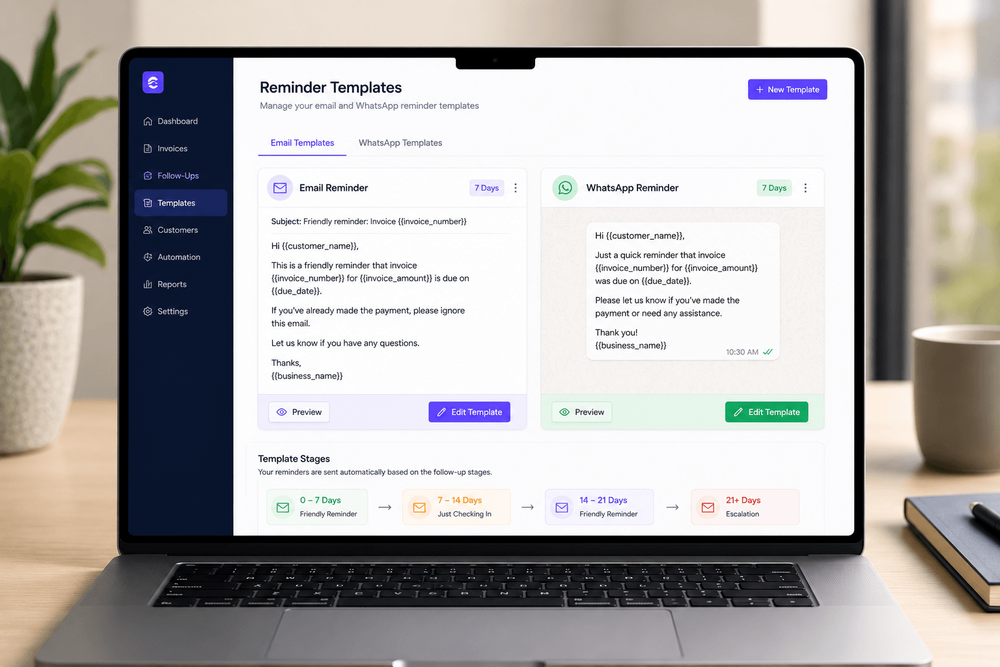
4. Use Different Follow-Up Stages
Not every invoice requires the same communication approach.
For example:
| Invoice Status | Communication Goal |
|---|---|
| 0–7 Days | Friendly reminder |
| 7–14 Days | Payment status check |
| 14–21 Days | Continued follow-up |
| 21+ Days | Escalation review |
This creates consistency while allowing businesses to adapt communication as invoices age.
5. Track Customer Commitments
When customers provide expected payment dates, those commitments should be documented and monitored.
Tracking commitments helps businesses:
- Improve forecasting
- Maintain accountability
- Reduce communication gaps
6. Review Receivables Regularly
Weekly reviews of outstanding balances help identify:
- Aging invoices
- Follow-up gaps
- Potential collection risks
- Escalation candidates
Small issues are often easier to resolve when identified early.
How Claro Flow Supports Cash Flow Visibility
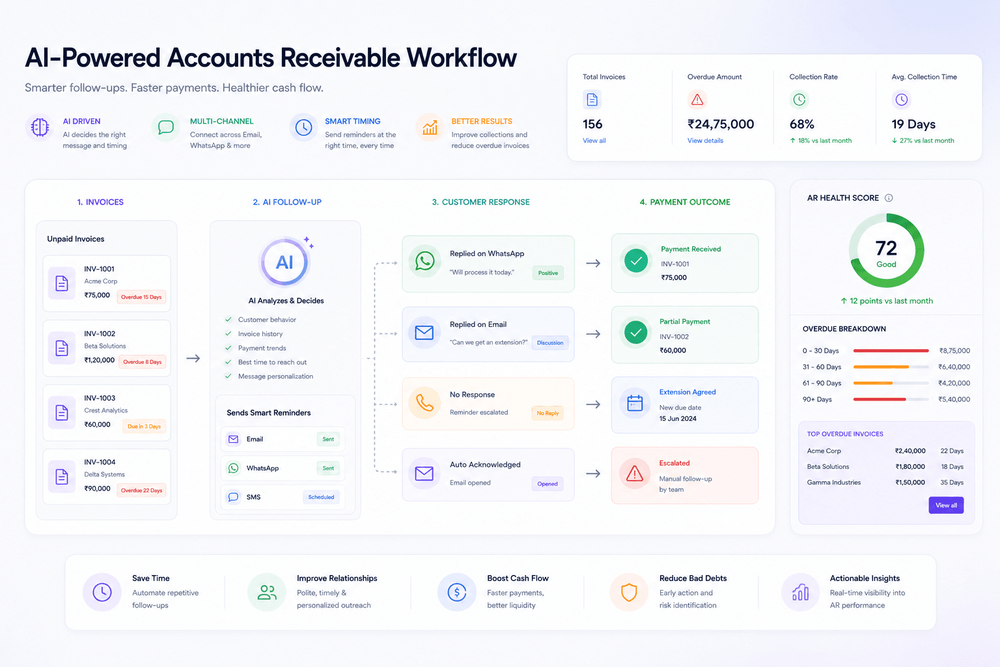
Claro Flow is designed to help businesses create structured invoice follow-up workflows.
Instead of relying on memory and spreadsheets, teams can:
- Organize reminders by invoice age
- Track communication history
- Monitor outstanding balances
- Review customer commitments
- Identify invoices that may require escalation
The objective is not to guarantee payment but to improve visibility, consistency, and operational control over the collection process.
Common Cash Flow Mistakes to Avoid
Businesses often hurt cash flow by:
- Waiting too long before following up
- Using inconsistent reminder schedules
- Failing to track customer responses
- Ignoring aging reports
- Treating collections as a reactive task
Strong financial operations are usually built through consistency rather than urgency.
Final Thoughts
Improving cash flow does not always require finding new customers.
In many cases, businesses can strengthen financial performance by improving how they manage existing invoices and receivables.
Clear workflows, structured follow-ups, communication tracking, and better visibility into outstanding balances help businesses make more informed decisions and maintain healthier cash flow over time.
The goal is not simply collecting money faster. The larger objective is creating reliable financial operations that support sustainable growth and stronger customer relationships.