Are Your Indian Clients Paying Late? Automate Your Follow-Ups and Get Paid Faster
Tired of chasing late payments from Indian clients? Discover how automating your invoice follow-ups can help you get paid on time without the awkwardness.

The Uncomfortable Truth About Chasing Payments in India
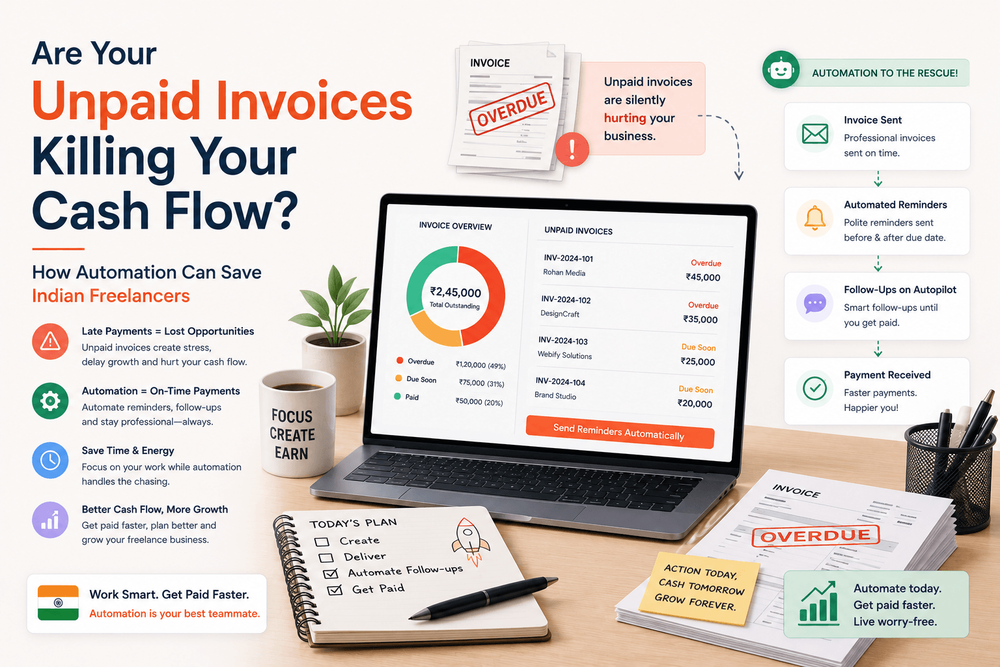
Every freelancer, agency owner, or small business in India knows the feeling. You've delivered great work, sent the invoice, and then... silence. The due date passes, and suddenly, you're faced with a choice: do you send that awkward WhatsApp message? Do you draft yet another polite-but-firm email? Or do you just let it slide, hoping the payment will magically appear, while your own bills pile up?
It’s a common scenario. Many Indian businesses, especially in the B2B service sector, struggle with clients who pay late. It's not always intentional; sometimes invoices get buried, or the client's internal processes are slow. But for you, the service provider, these delays directly impact your cash flow, causing stress and hindering your ability to invest in your business or even meet daily expenses. The act of chasing money often feels like begging, and it can strain client relationships – something no one wants. Yet, without consistent follow-up, those outstanding invoices remain just that: outstanding.
Why Late Payments Hurt Your Cash Flow
Cash flow is the lifeblood of any business. For Indian freelancers and small agencies, especially those dealing with project-based work or monthly retainers, predictable cash flow is crucial. When clients pay late, it creates a ripple effect that can be far more damaging than just a temporary inconvenience.
The Direct Impact on Your Finances
- Operational Delays: You might delay paying your own team, vendors, or even your GST, leading to penalties or missed opportunities.
- Growth Stifled: Without steady cash coming in, it's hard to invest in new tools, marketing, or hiring, limiting your business's potential.
- Personal Stress: For many small business owners, business finances are intertwined with personal finances. Late payments mean personal stress and uncertainty.
The Hidden Costs of Manual Chasing
Beyond the financial crunch, the time and mental energy spent chasing payments are significant. Every email drafted, every phone call made, every WhatsApp message sent is time you could have spent on client work, business development, or even taking a much-needed break. This administrative overhead is a hidden cost that eats into your profitability and productivity.
Common Reasons for Late Payments (and How to Address Them)
Understanding why clients pay late can help you structure your approach better. While some reasons are unavoidable, many can be mitigated with clear communication and consistent processes.
Lack of Clear Payment Terms
Often, the invoice itself might be vague. Did you specify a due date? What about accepted payment methods? Is your bank account number clearly visible for a NEFT/RTGS transfer, or your UPI ID for quick payments?
- Solution: Ensure every invoice explicitly states: due date (e.g., "Payment Due in 15 Days"), accepted payment methods (e.g., "Bank Transfer, UPI"), and all necessary details for payment (Bank Name, Account Number, IFSC Code, UPI ID).
Invoice Lost or Forgotten
In the digital deluge, emails get missed, and invoices get buried in inboxes. It's rarely malicious; just a consequence of busy work lives.
- Solution: Consistent, polite reminders are key. A gentle nudge a few days before the due date, and then escalating reminders after, can bring the invoice back to top-of-mind.
Internal Client Processes
Larger clients, or even some smaller ones, have internal approval processes that can take time. Your invoice might be awaiting approval from a manager, then finance, then finally processed for payment.
- Solution: While you can't control their internal systems, you can ensure your invoices are submitted correctly and promptly. Following up helps keep your invoice moving through their system.
The Power of Automated Follow-Ups
This is where automation steps in, not to replace human interaction entirely, but to handle the repetitive, awkward, and time-consuming task of chasing payments. Imagine a system that automatically sends out those polite reminders, freeing you to focus on your core business.
How Automation Works
Accounts receivable automation tools integrate with your accounting software (like QuickBooks for many Indian businesses) to identify unpaid invoices. Based on predefined rules, they then send out automated reminders.
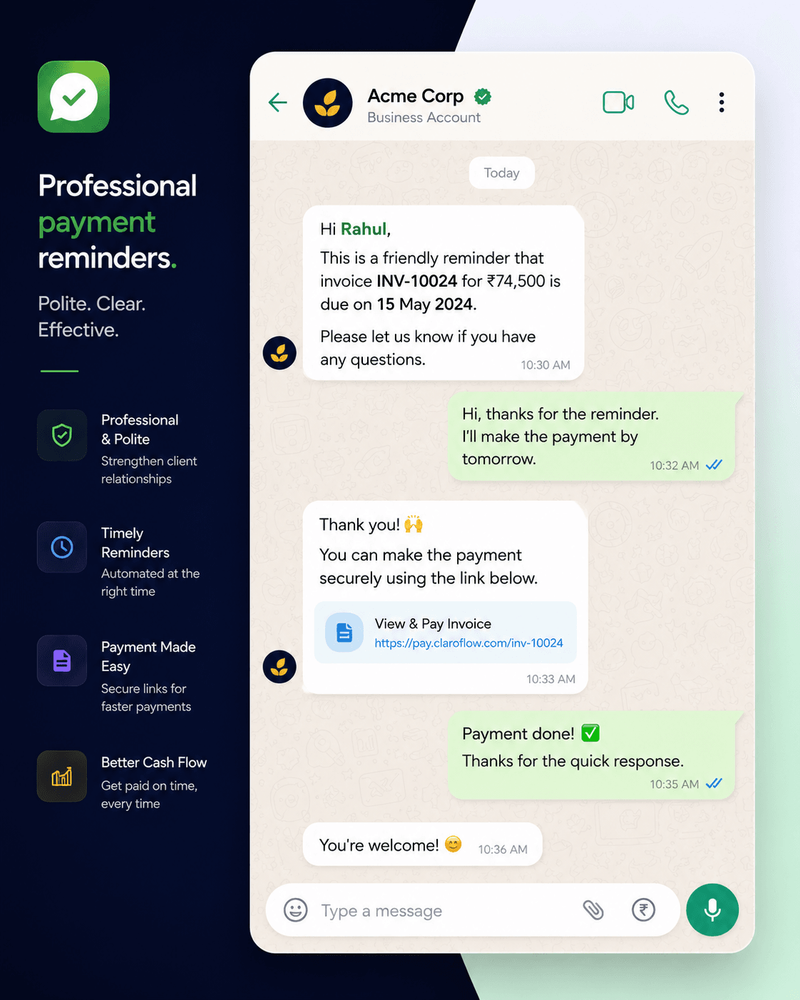
- Pre-Due Date Reminders: A friendly reminder a few days before the invoice is due. "Just a quick reminder that Invoice #1234 for ₹50,000 is due on [Date]."
- On-Due Date Reminders: A gentle nudge on the day the payment is due. "Your payment for Invoice #1234 is due today."
- Post-Due Date Reminders: Escalating messages for overdue invoices. "Invoice #1234 is now [X] days overdue. Please process payment at your earliest convenience."
Benefits Beyond Just Getting Paid
- Consistency: Every client gets the same professional follow-up, every time, without you having to remember.
- Professionalism: Automated messages are always polite, clear, and consistent in tone, maintaining your professional image.
- Time-Saving: Reclaim hours previously spent on manual follow-ups. This time can be redirected to revenue-generating activities.
- Reduced Friction: Automation removes the emotional burden and awkwardness of asking for money, preserving client relationships.
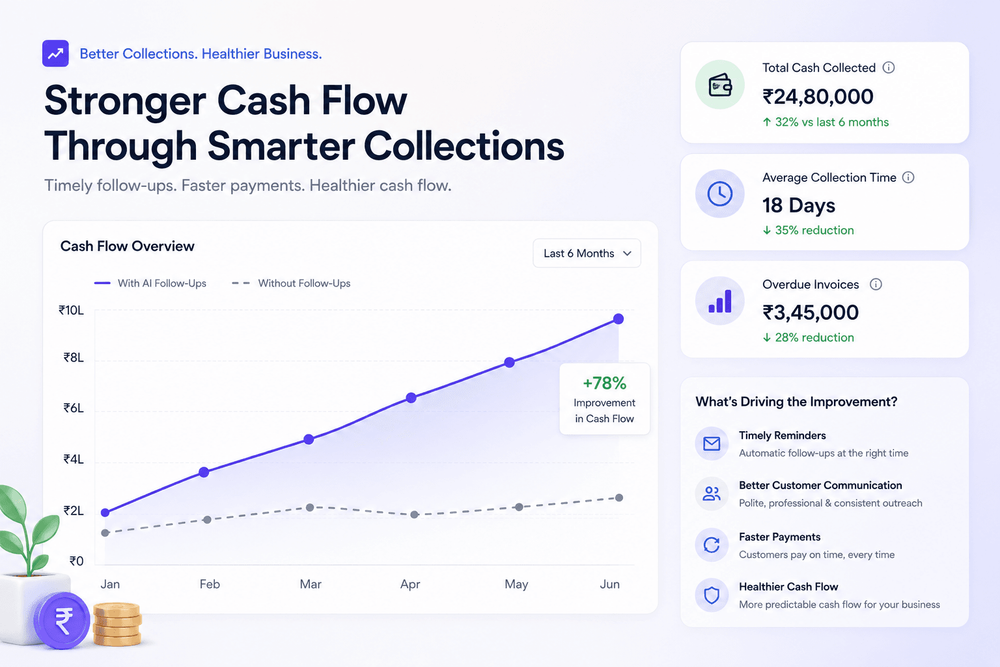
- Improved Cash Flow: By ensuring timely and consistent reminders, you significantly increase the chances of getting paid on or closer to the due date, stabilizing your cash flow.
Implementing Automated Follow-Ups for Your Indian Business
It's simpler than you might think to set up an automated system that works for your specific needs.
Step 1: Standardize Your Invoicing Process
Before automating follow-ups, ensure your invoices are clear, professional, and contain all necessary details. Use a consistent template that includes:
- Your business name, address, GSTIN
- Client's business name, address, GSTIN
- Invoice number, date, due date
- Detailed breakdown of services/products with costs
- Total amount due (clearly in ₹)
- Payment instructions (bank details, UPI ID)
- Your contact information
Step 2: Choose the Right Automation Tool
Look for a tool that understands the Indian context and integrates with your existing accounting software. Claro Flow, for example, integrates with QuickBooks to automatically sync your unpaid invoices. It then handles the automated email and WhatsApp reminders, making sure your clients are gently nudged without you lifting a finger.
Step 3: Set Up Your Reminder Schedule
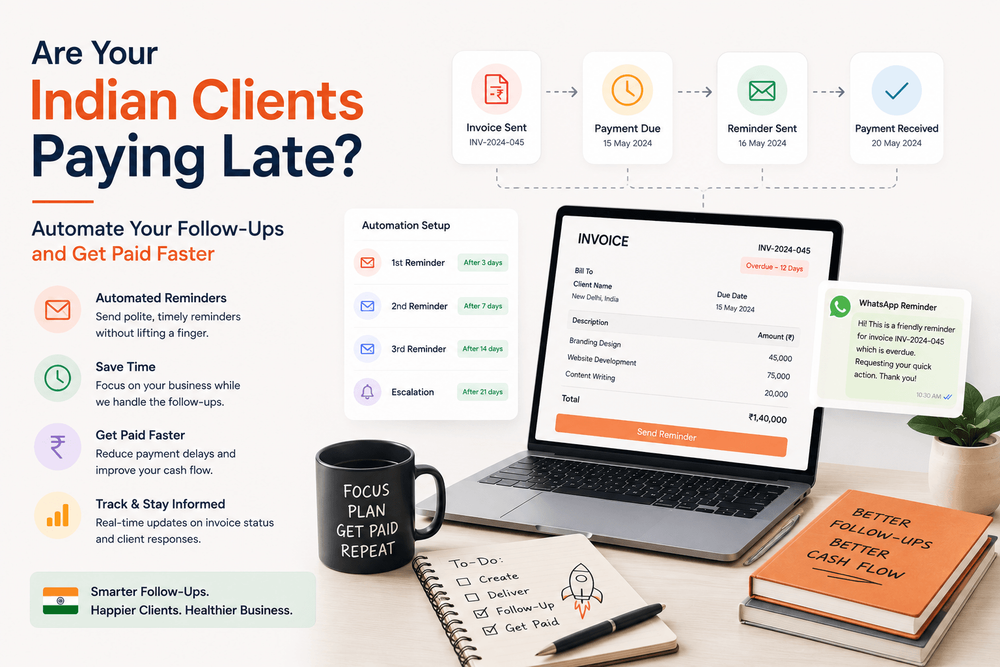
Customize your follow-up sequence. A typical flow might look like this:
- Email 1: 3 days before due date (friendly reminder)
- WhatsApp 1: On due date (polite nudge)
- Email 2: 5 days after due date (overdue notification)
- WhatsApp 2: 10 days after due date (more urgent reminder)
- Email 3: 15 days after due date (escalation notice, if necessary)
Remember to keep the tone professional and helpful, not accusatory. The goal is to facilitate payment, not alienate the client.
Step 4: Monitor and Adjust
Automation doesn't mean set-it-and-forget-it entirely. Keep an eye on your payment trends. Are certain clients consistently late despite reminders? Do you need to adjust your terms or communication strategy for them? The data from your automated system can provide valuable insights.
Claro Flow: Your Partner in Hassle-Free Collections
We understand that chasing payments is the most dreaded part of running a business. It's time-consuming, emotionally draining, and can harm relationships you've worked hard to build. That's exactly why Claro Flow exists: to take that burden off your shoulders.
Claro Flow integrates with your QuickBooks account, automatically identifies outstanding invoices, and then sends out those timely, polite, and persistent payment reminders via email and WhatsApp. It's designed specifically for Indian freelancers, agencies, and small businesses who need to maintain their cash flow without the constant stress of chasing clients. We handle the awkward, repetitive chasing, so you don't have to. Our slogan isn't just a catchy phrase; it's our promise: "Chase Nothing, Collect Everything."
Conclusion: Reclaim Your Time and Peace of Mind
Late payments are a persistent challenge for Indian businesses, directly impacting cash flow and causing unnecessary stress. While you can't force a client to pay, you can control the efficiency and consistency of your follow-up process. By embracing automation for your invoice reminders, you're not just getting paid faster; you're reclaiming valuable time, reducing administrative burden, and maintaining professional client relationships without the awkward conversations.
If the follow-up part is what you dread, Claro Flow can handle that for you. It's about working smarter, not harder, to ensure your hard-earned money makes its way back to your business, where it belongs.